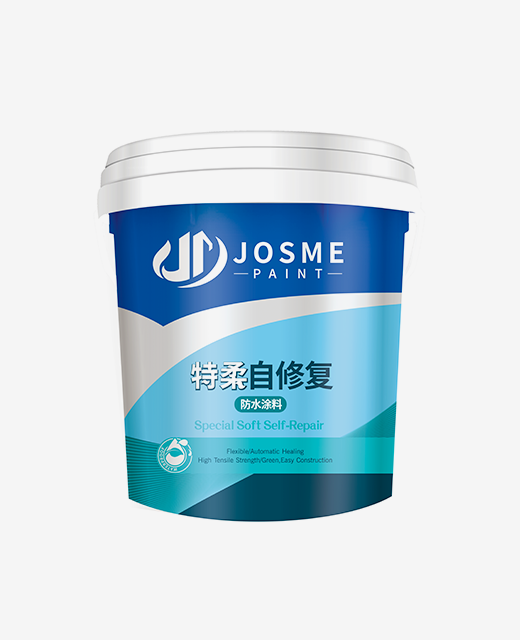
Ultra-flexible Self-healing Waterproof Coating for Residential & Commercial Waterproofing — Active Crack Repair Technology
JOSME Ultra-Flexible Self-healing Waterproof Coating is a water-based polymer-cement coating for moving substrates. It offers active crack repair through chemical reactions between emulsion groups and cement hydration products, which distinguishes it from passive waterproof membranes used in typical residential and commercial construction, with elongation at break >200% and recommended consumption of 1.8–2.0 kg/㎡ at 1.0 mm film thickness.
What Makes This Coating Different from Standard Waterproofing?
Most Ultra-flexible Self-healing Waterproof Coating create a static barrier. Once a micro-crack forms under substrate movement or thermal cycling, moisture finds its way through and the membrane fails silently.
This coating responds to damage, it doesn’t ignore it.” Upon contact with water at a vulnerable spot, the polymer swells and chemical groups in the emulsion react with the cement hydration products to seal the fracture, without the need for human involvement. This results in a water-proof coating that keeps working after micro-damage, rather than waiting for the next inspection.
This active self-healing response sets it apart from high-flexibility coatings that stretch but do not recover chemically.
Key Technical Parameters
| Parameter |
Value |
| Elongation at Break |
>200% |
| Recommended Film Thickness |
1.0 mm |
| Recommended Consumption |
1.8–2.0 kg/㎡ |
| Liquid-to-Powder Ratio |
1:1.2 |
| Application Method |
Brush / Roller |
| Storage Temperature |
5°C to 35°C |
| Storage Conditions |
Cool, dry place |
| VOC Level |
Low-VOC, water-based |
Ultra-flexible Self-healing Waterproof Coating Advantages
Active Self-Healing: Polymer swells when in contact with water and reacts with cement hydration agents to self-close micro-cracks – no patching needed.
Elongation>200%: the film stretches >200% to move with substrate settling, thermal expansion and loading without tearing or delaminating.
Breathable yet Impermeable: Allows vapour to pass through, but not liquid water, avoiding moisture build-up behind the layer.
Displacement Resistance: Holds bond integrity and allows for movement caused by temperature fluctuations or structural loads – perfect for balconies and podium decks.
Low VOC, Water Based: Meets China Environmental Labelling and Green Product Certification; Safe for enclosed interior environments
Brush & Roller Application: No spray equipment required. Optimal liquid-to-powder ratio is 1:1.2 for lowest mixing error.
Where to Apply This Coating
For regions with structural movement, dampness or both.
Residential
Bathroom/kitchen floors – significant deformation, permanent dampness
Balconies - weather and temperature cycling
Bedrooms – tiny cracks at floor-wall intersections
Concrete roofs - waterproofing followed by a cement mortar protective layer
Commercial and Infrastructure
Concrete rooftops with equipment stress.
Expansion joints and podium decks with high movement capacity
Basement and foundation walls in high humidity areas
Surfaces that require waterproofing on the negative side
Important: For concrete roofs, after waterproofing, put a protective layer of cement mortar to protect from UV and mechanical damage.

Quality Control Process
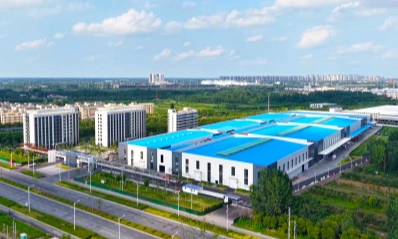
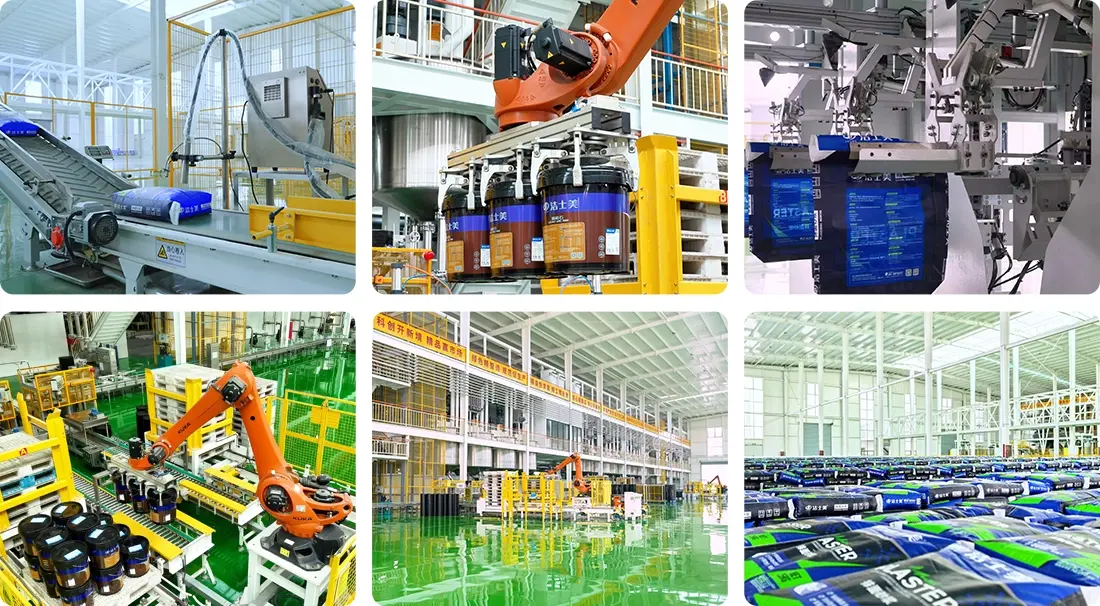
Quality control of JOSME includes incoming raw material inspection, in-process monitoring and end Ultra-flexible Self-healing Waterproof Coating testing. Physical properties, including as flexibility, adhesion and film homogeneity are checked for each batch.
Main tests:
Low Temperature Flexibility Films tested at sub-zero temperatures to ensure no breakage under cold weather bending stress
Pressure Tightness: Tested for hydraulic resistance according to EN 1928
Artificial Weathering: UV and weather resistance tested by Xenon arc exposure
VOC Compliance: Verifies formulation satisfies green building indoor air quality requirements
Cyclic Movement Testing: Repeated expansion and contraction of a joint to confirm fatigue resistance
Batch-to-batch sample retention helps to ensure uniformity in colour, particle size and coating performance.
Certifications
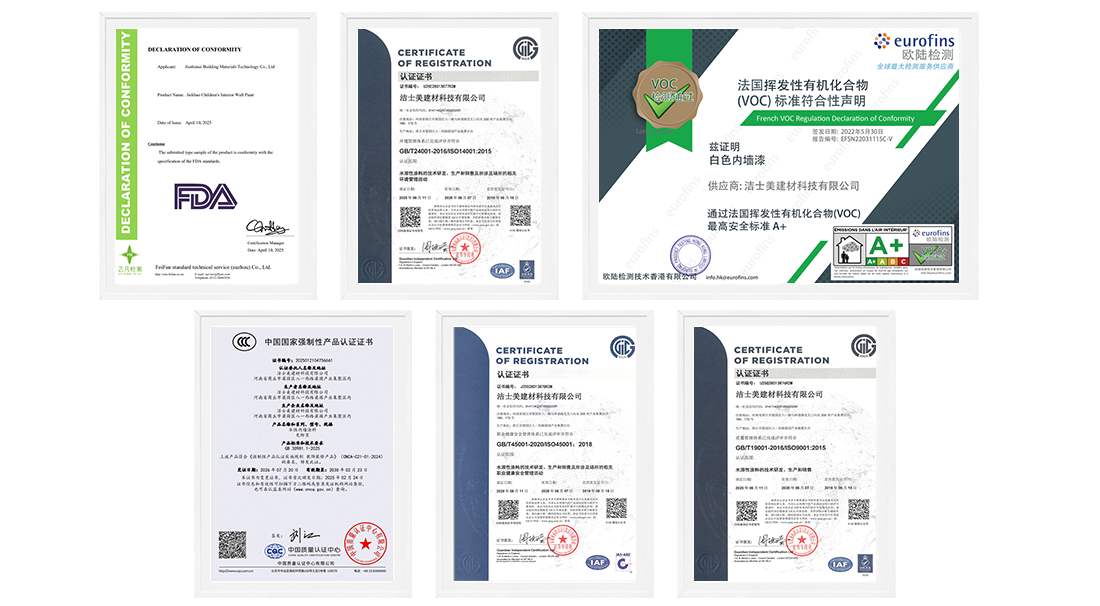
JOSME is ISO 9001, ISO 14001, ISO 45001, ISO 50001 and MSDS certified.
Products: China Environmental Labelling, China Green Product Certification. Complete documentation and test reports are available on request.
Packaging and Delivery
Better export quality packaging for maritime freight and long haul shipping. Leak, delamination and transit damage protection.
Ships available for shipment
Standard products: 2-3 working days
Custom / private label 7-15 working days
Customisation: colour matching, private-label packaging, modified particle size, custom formulas.
Frequently Asked Questions
Q: How does the self-healing function work, and how is it different from ordinary flexible waterproofing?
A: When water contacts a damaged area, the film swells and chemical groups in the emulsion react with cement hydration products to close micro-cracks autonomously. Standard high-flexibility coatings can stretch to accommodate movement, but they do not have this chemical recovery mechanism — once damaged, they stay damaged.
Q: What deformation situations can the >200% elongation at break handle?
A: The film can absorb the deformation of the substrate produced by the settlement of the building and temperature variation without ripping. This makes it ideal for use in kitchens, baths, balconies and other areas where there is a high risk of structural movement.
Q: Which areas of a new residential project are most appropriate for this coating?
A: Bathroom and kitchen floors, balconies, and bedrooms are the priority areas due to higher structural deformation risk. It can also be used on concrete roofs, provided a cement mortar protective layer is applied after the waterproof layer is complete.
Q: Does application require specialist equipment?
A: Brush or roller application is standard for residential and most commercial projects. No specialist spray equipment is required for typical site conditions.
Contact Us
For Ultra-flexible Self-healing Waterproof Coating project inquiries, samples, or technical documentation, contact us at [email protected] .