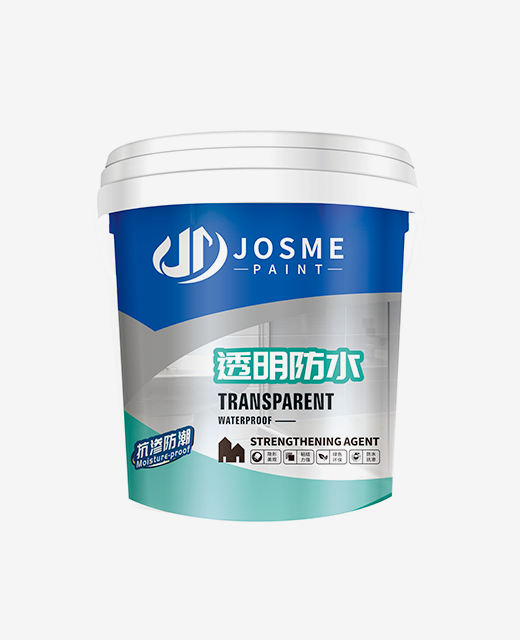
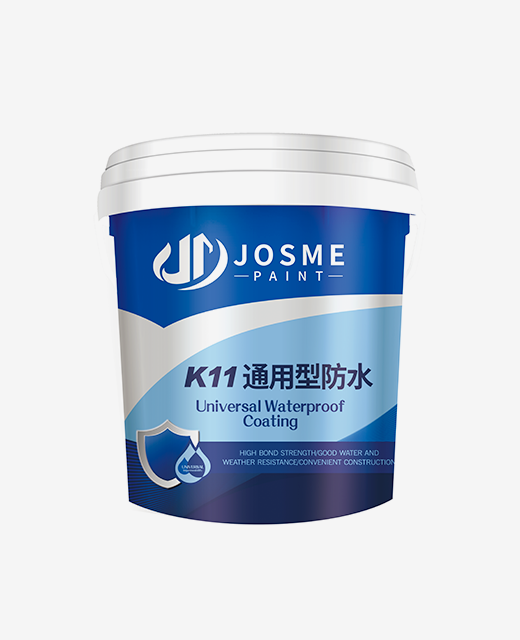
Liquid Waterproofing Membrane for Roofs, Basements & Facades
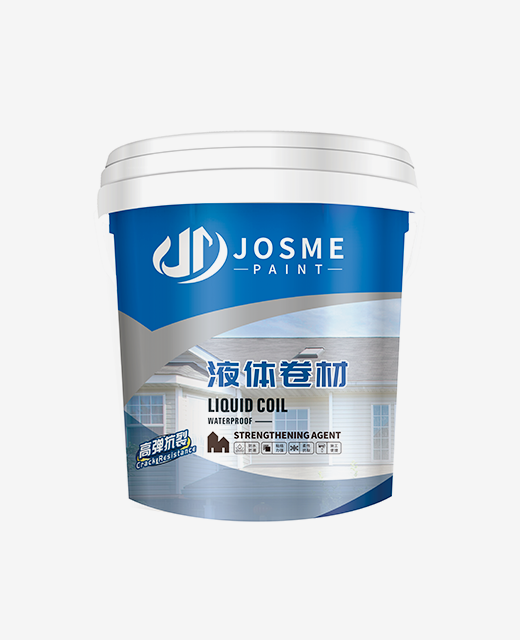
JOSME's Liquid Waterproofing Membrane is a polymer-modified asphalt waterproof coating formulated from high-grade polymer emulsion, emulsified asphalt modifier, fillers, and functional additives. Once applied, it cures into a monolithic, rubber-like elastic film that bonds fully to the substrate — no joints, no laps, no gaps. This continuous barrier suits roofs, gutters, balconies, basements, and concrete masonry structures. Recommended consumption is approximately 1.8–2.0 kg/㎡ at 1 mm dry film thickness, applied by brush or roller.
Why Liquid Application Outperforms Sheet Membranes
Conventional sheet membranes depend on overlapping seams and mechanical fastening. Those joints are the weakest point of failure.” That weakness is overcome using a liquid applied membrane which flows into difficult geometries – pipe penetrations, upstands, interior corners and uneven surfaces where sheet systems cannot maintain a continuous seal.
Because the film is totally attached, there is no lateral water movement below it. If the surface is pierced, the moisture remains localised and does not migrate below the membrane, therefore limiting concealed harm to the substrate over time.
Key Performance Characteristics
Elongation up to 1000 %
Standard JS polymer cement waterproof coatings generally have an elongation of 300%. The maximum percentage of this liquid membrane is 1000%, which provides the film a high stretch and recovery, when the substrate moves, settles or expands with temperature variations. The cracks in the substrate are less likely to cut through the covering.
Operating temperature range: -15 °C to +80 °C
Coating is hard at 80°C, no softening, no flow, no pooling. It is still bendable at -15°C. This series covers the two most typical outdoor waterproofing failure modes: softening in summer heat and freeze-cracking in winter.
Self healing behaviour on small punctures
The coating may heal tiny holes after slight puncture damage to assist re-establish the continuous barrier. This behaviour may increase the useful service life of exposed apps.
Penetration of cracks and sealing of leaks
The liquid formulation flows into hairline cracks before curing, filling voids that brush-applied pastes may not reach. This makes the Liquid Waterproofing Membrane well suited for repair work on aging concrete roofs or gutters with surface micro-cracking.
Liquid Waterproofing Membrane Specifications
| Parameter |
Value |
| Product Type |
Polymer-Modified Asphalt Waterproof Coating |
| Application Method |
Brush / Roller |
| Recommended Consumption (1 mm DFT) |
Approx. 1.8–2.0 kg/㎡ |
| High-Temperature Resistance |
No flow at 80°C |
| Low-Temperature Flexibility |
No cracking at –15°C |
| Maximum Elongation |
Up to 1000% |
| Storage Temperature |
5°C to 35°C |
| Storage Conditions |
Cool, dry place, away from direct sunlight |
Application Scenarios
This membrane is suited for areas where water intrusion risk is high and structural access after installation is limited:
- Building rooftops — flat and low-slope roofs exposed to rain, UV, and seasonal temperature swings
- Gutters and drainage channels — high water contact zones prone to joint failure
- Balconies and terraces — foot traffic areas where both flexibility and adhesion are needed
- Basements and underground walls — moisture-prone structures requiring continuous barrier protection
- Concrete masonry facades — non-exposed vertical surfaces needing moisture and vapor resistance
It is also used for waterproof repair on existing structures where replacing sheet membranes is not practical.

Quality Control
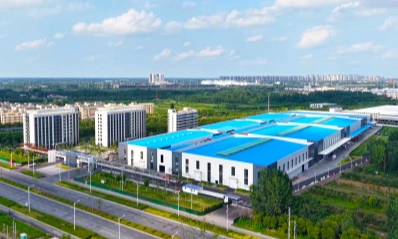
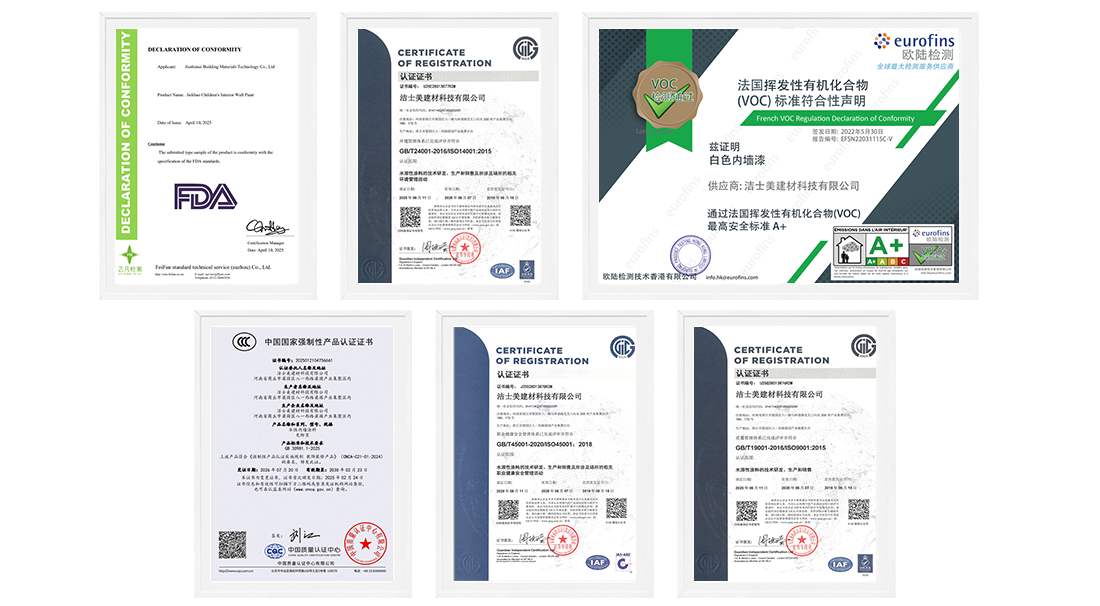
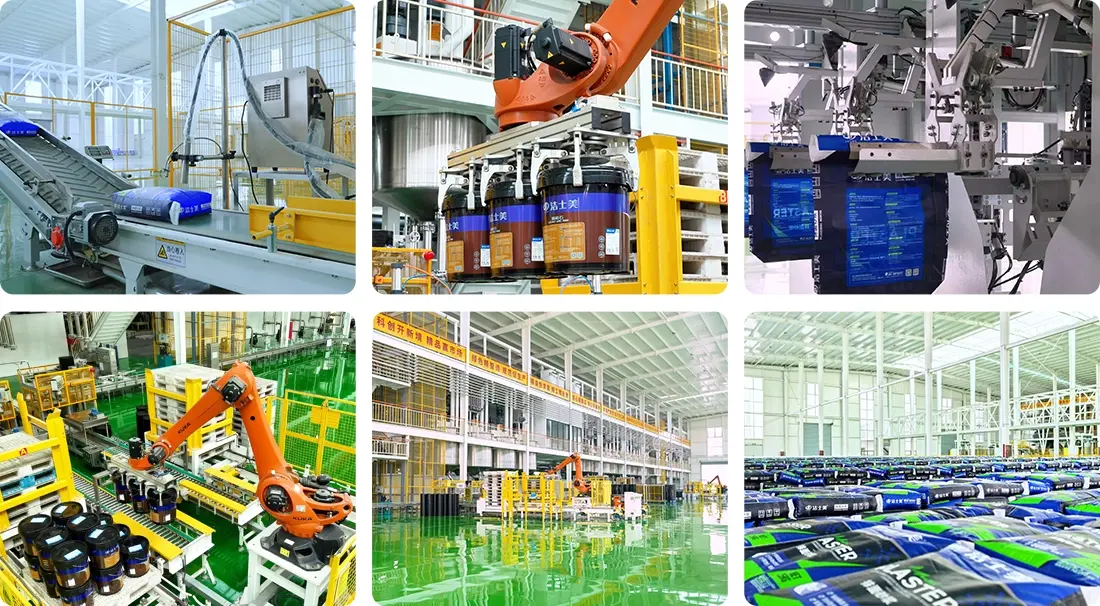
JOSME’s manufacturing method involves three quality control steps: inbound inspection of raw materials, in-process monitoring and end product testing. Batch-to-batch sample retention in production runs allows for consistency in film-forming performance, elongation behaviour and adhesion.
Recommended on-site inspections for customers doing their own verification are:
Control of wet film thickness (WFT) during application
Measure the Dry Film Thickness (DFT) after cure
Pull-off adhesion testing (ASTM D4541) – minimum bond strength target: 1.5 N/mm2 to substrate
Holiday test (high voltage spark test) to determine any pinholes or defects in the cured film
It is also advisable to verify the consumption rate per m² against the product TDS to ensure the membrane achieves its stipulated design thickness.
Packaging & Logistics
Products are packed in reinforced export-grade packaging suited for ocean freight, with protection against leakage, delamination, and transit damage. Supporting export documentation is available.
Standard products ship within 2–3 working days. Custom-formula or private-label orders require 7–15 working days. Large project orders can be scheduled in advance to reserve production capacity.
Customization Options
JOSME supports customized coating solutions for different project requirements:
- Custom formulations and viscosity adjustments
- Private-label packaging
- Customer sample matching
- Customized packaging sizes
Contact us to discuss your specific project needs or to request a sample before placing an order.
FAQ
Q: What is the performance difference between this polymer-modified asphalt formula and conventional waterproof coatings?
A: The primary difference is elongation. This liquid waterproofing membrane reaches up to 1000% elongation, while standard JS or polymer cement systems typically cap at around 300%. It also offers greater weather resistance, high- and low-temperature stability, and self-healing behavior after minor puncture damage — which makes it better suited for exposed, large-area, or structurally active applications.
Q: How does the wide temperature range perform under extreme seasonal conditions?
A: At 80°C the film stays firm without flowing or pooling. At –15°C it remains flexible without cracking. This covers the two most common outdoor waterproofing failure modes and helps maintain stable performance year-round.
Q: Why does high elongation matter for long-term roof waterproofing?
A: Building substrates shift due to settlement, thermal cycling, and structural load. A coating with 1000% elongation can stretch with those movements rather than tearing. The film remains intact and continuous even as micro-cracks develop in the concrete beneath it.
Q: How long does the membrane take to cure?
A: Rain-fastness is typically achieved within 2–4 hours depending on temperature and humidity. Full mechanical cure takes 24–48 hours.
Contact Us
Have a Liquid Waterproofing Membrane project requirement or need a product sample? Reach our team at [email protected] — we look forward to hearing from you.